FAQs

Frequently Asked Questions about STEELPORT knives and accessories.

Where are STEELPORT knives made?

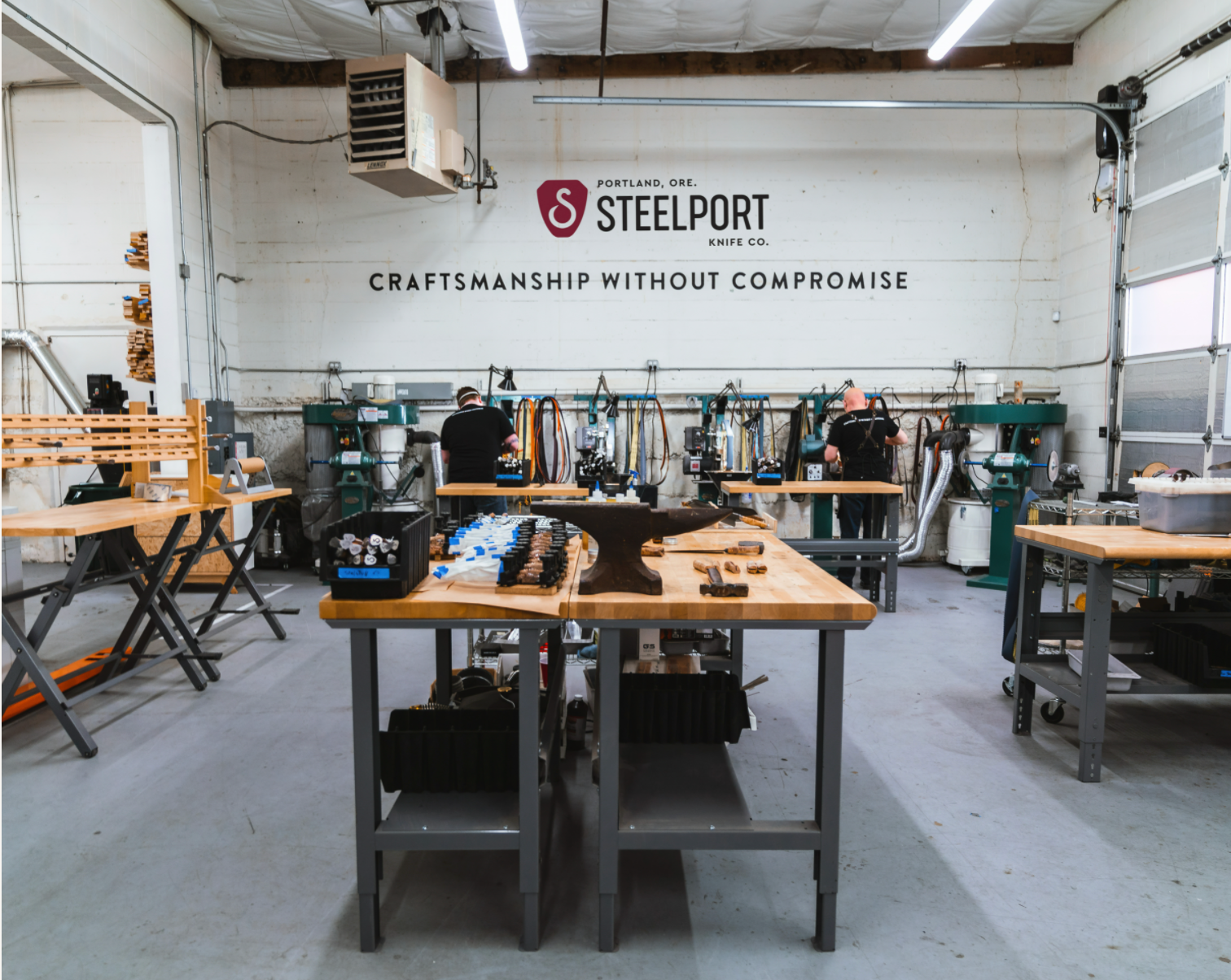
STEELPORT knives are made in Portland, Oregon, USA. Every STEELPORT knife passes through seven pairs of hardworking American hands and 134 steps, from steel forging through final inspection, before it ships.

What steel is used in STEELPORT knives?

STEELPORT knives are made from American-forged 52100 high-carbon steel, heat treated to 65 HRC. 52100 is a ball-bearing grade carbon steel prized for exceptional edge retention and toughness. Combined with our Proprietary heat treatment, it takes a sharper edge than most stainless steel and holds it significantly longer.

Is carbon steel hard to maintain?

No more than any good knife. Hand wash, dry right away, and hone regularly. That's it. In addition, STEELPORT knives get a polished finish followed by Coffee patina which combined provide additonal protection for a controlled patina. Carbon steel develops this change of hue, patina, over time based on usage and from contact with hands, food and air. That's normal (not rust) and it doesn't affect performance. Learn more on our care & use page.

What is the handle made from?

The handle is made from locally grown Oregon Maple, fitted to a full tang blade. The contoured shape supports a firm grip during close, controlled work.

Do I need a honing rod, and how do I use one?

Yes. Honing rods will help preserve your knife edge. A honing rod (STEELPORT uses a ceramic rod) realigns the edge while removing a minimal amount of steel. Run the blade along the rod at 17 degrees, 3–5 strokes per side, regularly. Learn more about how to use a honing rod.

Why do STEELPORT knives cost what they do?

All of our knives are made one at a time in Portland, Oregon, from American-forged 52100 carbon steel. Seven pairs of hands touch every blade before it ships. You're buying a tool built to last a lifetime, not one you'll replace when the edge goes.

8" Chef Knife

What is the 8" chef's knife made for?

The 8" chef's knife is the most versatile knife in the kitchen: chopping vegetables, slicing proteins, mincing herbs, breaking down a chicken, most of the prep work you'll do day to day. The blade length gives you reach; the 52100 carbon steel and 65 HRC heat treat give you an edge that stays sharp through long prep sessions.

How does the 8" chef's knife feel to use?

The full tang construction and contoured Oregon Maple handle balance the weight of the blade naturally in a pinch grip. The hand-polished bolster and finger groove sit where your index finger rests. It's designed to feel deliberate and responsive, substantial without being heavy.

6" Chef Knife

What is the 6" chef's knife made for?

The 6" chef's knife is made for quick, precise everyday prep, breaking down vegetables, slicing proteins, mincing. Built from American-forged 52100 carbon steel and light enough to stay responsive through extended prep sessions. The knife that tends to stay on the cutting board all week.

Is the 6" chef's knife a good fit for smaller hands?

The shorter blade and lighter weight make the 6" a natural fit for cooks who find an 8" tiring over longer prep sessions. The Oregon Maple handle is contoured for a secure pinch grip regardless of hand size.

4" Paring Knife

What is the 4" paring knife made for?

The paring knife is more agile and handles the work a chef's knife can't do comfortably: peeling fruit and vegetables, trimming, deveining shrimp, segmenting citrus, detail work that needs close control rather than board space. Most of it happens in-hand but at 4" long blade, it also us for use on cutting boards for smaller jobs and garnishes. Made from the same 52100 carbon steel as every knife in the collection.

Is a paring knife worth buying?

Yes. A paring knife is considered part of the 3 essential kitchen knives (the other two being Chef and serrated Bread knives). There's a category of kitchen work a chef's knife simply isn't designed for: close, in-hand tasks where a long blade becomes a liability. This one is made from the same American-forged 52100 carbon steel as every knife in the collection, with a Lifetime Warranty and free sharpening.

10" Bread Knife

What can I use the 10" bread knife for?

The 10" serrated blade is especially suited for anything with a crust or skin and a soft interior: artisan loaves, sourdough, brioche, brisket, tomatoes, citrus, layer cakes. The length lets you span a full loaf and the unique wavy serration allows a smooth cut in a single stroke without compressing the crumb.

Can the bread knife be sharpened?

Yes. Serrated knives can be sharpened with a tapered ceramic rod or a serration-specific sharpener. Like all other STEELPORT knives, the Bread knife is also covered by free life time sharpeing. With proper care, a quality serrated blade like this 65HRC serrated blade holds its edge for years before it needs attention.

10" Slicing Knife

What is the 10" Slicing Knife made for?

The 10" Slicing Knife is made for long, clean cuts through large roasts, whole poultry, brisket, ham, fish and smoked meats. The narrow forged blade reduces drag so each pass pulls clean with minimal tearing. At 10", it covers the full width of most cuts in a single stroke.

What's the difference between a slicing knife and a carving knife?

A slicing knife has a longer, thinner blade made for smooth, uninterrupted pull cuts through large pieces of meat: brisket, roasts, whole birds. A carving knife is typically shorter and stiffer, used for more controlled tableside work. The STEELPORT 10" slicing knife is built for the long stroke.

6" Boning Knife

What is the 6" boning knife made for?

The 6" boning knife is made for separating meat from bone: breaking down whole chickens and other poultry, trimming silverskin from beef and pork, Frenching lamb chops, and filleting fish. The narrow forged blade follows the contour of bone with precision.

Is the STEELPORT boning knife flexible or stiff?

Semi-flexible. There's enough rigidity for control when working around large joints, and enough flex to follow the contour of bone when filleting or trimming smaller cuts. It's made to handle the full range of butchery and prep work without switching tools.

12" Oval Ceramic Honing Rod

What is a honing rod used for?

A honing rod realigns the microscopic edge of a knife blade that folds slightly out of position during regular use, without excessive steel removal. It helps preserve the knife edge between a full sharpening. When used consistently, it will make a noticeable difference in cutting performance.

How do I use the STEELPORT honing rod?

There are multiple options. A simple approach is to hold the rod vertically with the tip secured on a cutting board. Draw the blade along the ceramic surface at 17 degrees, from heel to tip following the blade curvature, 3–5 strokes per side. This is done with a light pressure as the intent is adjusting a thin layer of steel at the tip. The 12" length allows a full stroke on any kitchen knife. Do this regularly to keep your edge aligned.