



If you've recently purchased your first carbon steel knife, or you're considering one, there's a good chance you've encountered the word "patina" and wondered whether it's something to worry about or something to welcome. The answer, unambiguously, is the latter. But we understand why it causes concern, especially when confused with the other unwelcome rusting condition.
When a carbon steel blade starts changing color (naturally changing color, developing that characteristic grey-to-black duotone) it can look like something not normal and might be going wrong. It's not. It's one of the most uniquely satisfying aspects of owning a high-quality carbon steel knife, and a reason these products become unique heirlooms. Once you understand what's actually happening at the steel level, you'll actively look forward to watching your knife develop its own character over time.
Here's the complete guide to carbon steel knife patina: what it is, why it happens, how it protects your blade, and why your STEELPORT knife is already ahead of the curve before it even reaches your kitchen.
What Is a Carbon Steel Knife Patina?
A patina is a thin layer of iron oxide that forms on the surface of carbon steel when it reacts with elements in its environment: food acids, moisture, oxygen, and the oils naturally present on your hands. It's a chemical process called oxidation, and it's the same basic mechanism that causes iron to rust, however, with one critical distinction.
Rust is uncontrolled oxidation. Patina is controlled aging. For a more technical description, these are both forms of metal oxidation, but patina is a stable, tight, and protective surface layer (often magnetite, Fe3O4) that develops slowly and naturally stops further reactions. Rust (Fe2O3), on the other hand, is a flaky and porous form of iron oxide that expands, crumbles, and creates a run away etching since each reaction creates a water molecule.
When carbon steel oxidizes slowly through regular food contact and air exposure, it forms a stable iron oxide layer (the patina) that actually passivates the steel surface. This means it creates a micro-thin barrier that slows further oxidation and makes the blade more resistant to the kind of aggressive rust that can genuinely damage a knife.
In simple terms: patina is your blade protecting itself. The more you cook with your carbon steel knife, the more the patina develops, and the more naturally protected the steel becomes.
This is fundamentally different from what happens to stainless steel, which relies on chromium content (typically 13–20%) to resist oxidation chemically. This resistance is at the expense of other desired knife characteristics. Carbon steel doesn’t rely on chemicals like chromium to make it oxidation resistation. This is why Carbob steel knives are still used for most premium knives and allow for a sharper edge and staying sharp longer. It’s also why these knives develop a patina instead of staying silver or developing random discolorations. The trade-off is real, and for serious cooks, it's absolutely worth it.
Why STEELPORT Knives Start with a Coffee Patina
Here's something we're genuinely proud of at STEELPORT: every knife we ship from our Portland, Oregon workshop has already had its first patina forced before it ever reaches your kitchen.
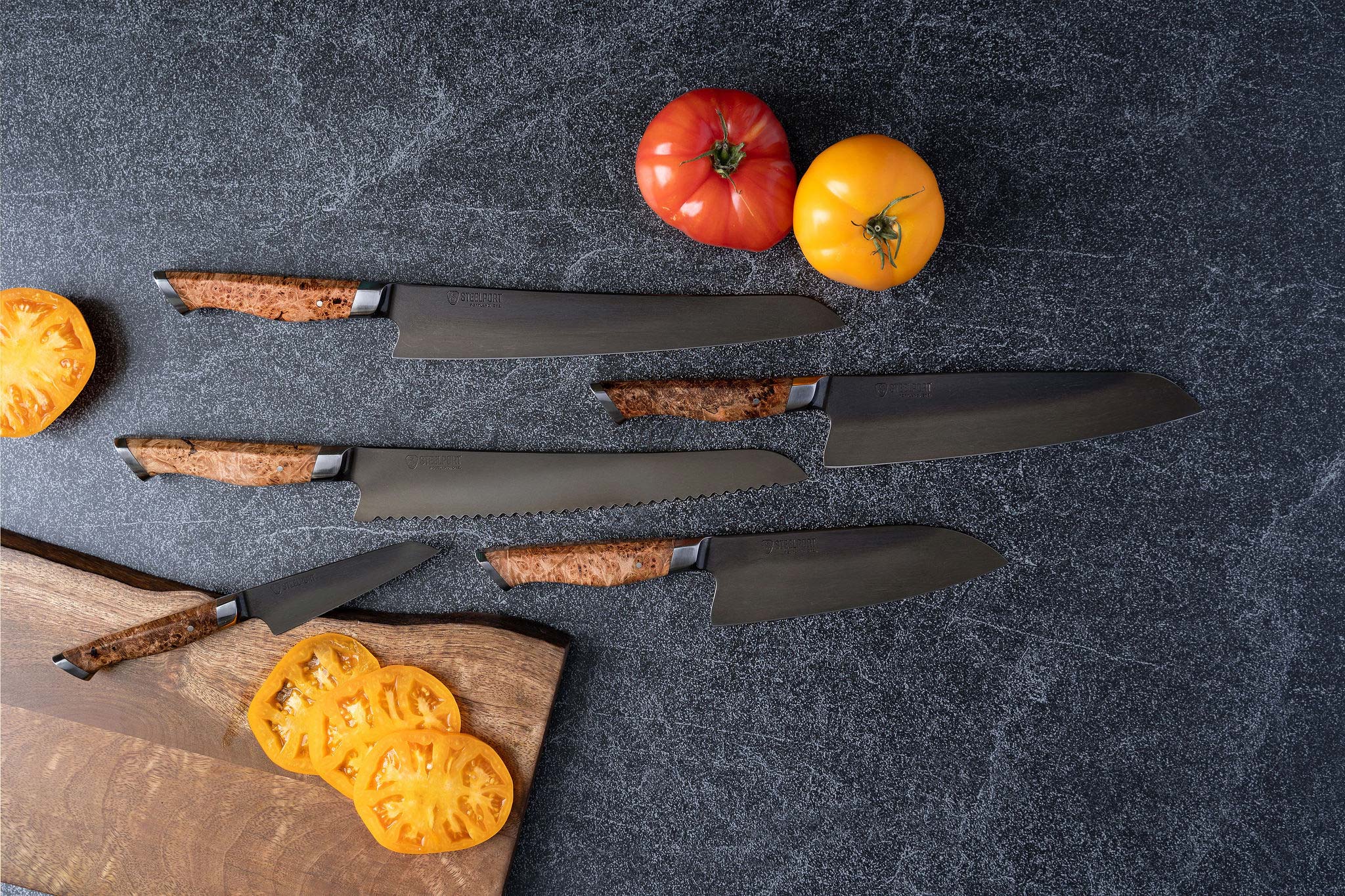
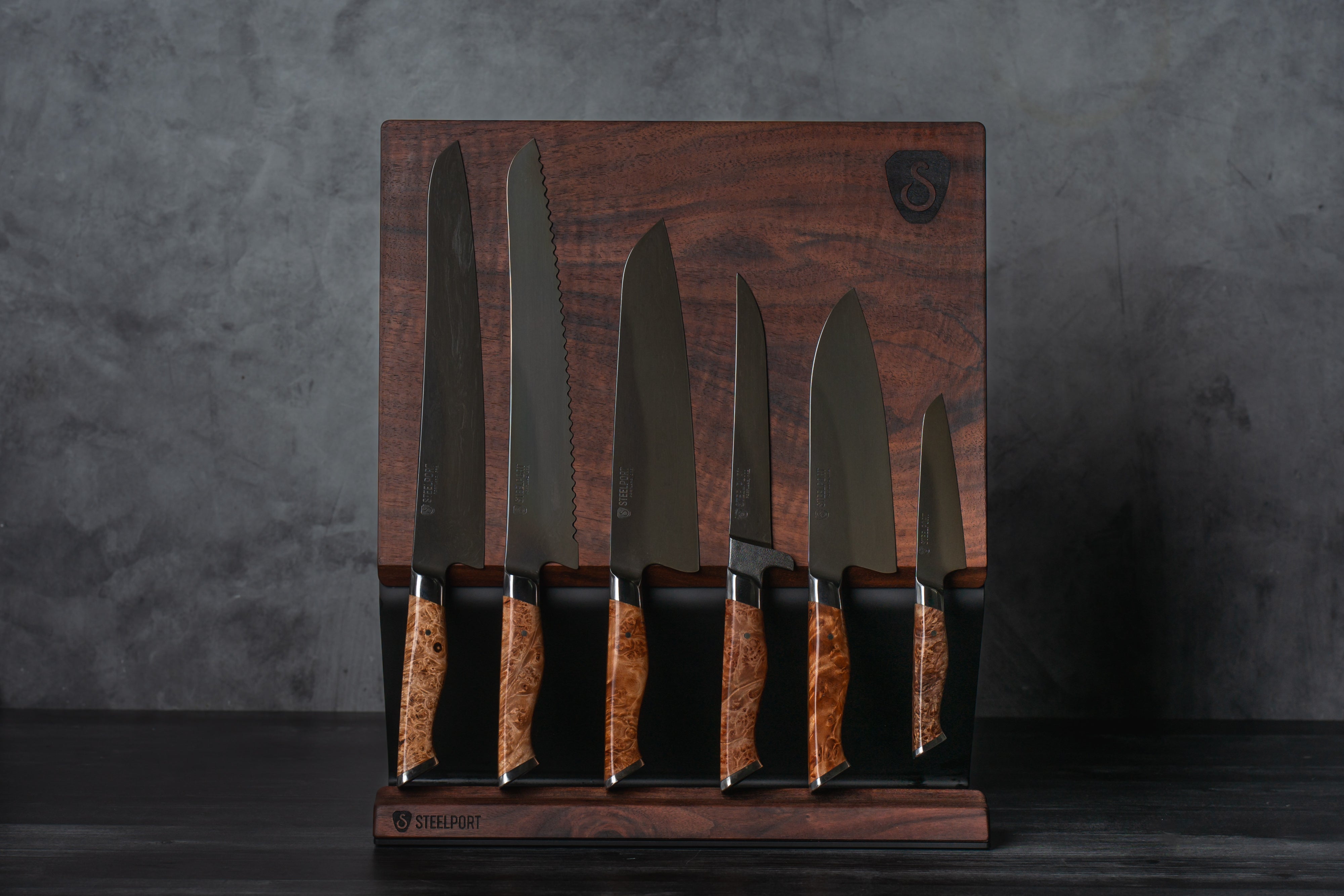
We developed a unique coffee patina process specifically for our 52100 carbon steel blades. Each knife is submerged in hot coffee (yes, literally) after the blade is forged, ground, heat-treated, and inspected. The coffee's natural acidity reacts with the steel to create an initial controlled patina that provides an early layer of protection from day one, and creates the beautiful dark dual-tone color that has become STEELPORT's signature aesthetic.
But the coffee patina serves a function beyond beauty. When we force the patina at the end of our knife-making process, it reveals the finer details of the blade — the steel grain flow, the temper line showing where the differential heat treatment created our 65 HRC hardness at the blade edge and softer 30 HRC spine, and any imperfections that wouldn't meet our quality standards. The patina becomes our final quality inspection tool as much as our finishing step.
So your STEELPORT knife doesn't arrive factory-sterile and chrome-bright. It arrives alive-already wearing the first chapter of its story. What happens next is your story to write and pass along.
How Patina Develops Over Time — And What Drives It
Every STEELPORT knife will develop its own unique patina based on exactly how and what you cook. This is part of what we mean when we call these knives modern heirlooms. No two will ever look the same, because no two cooks are the same. The key to controlled patina is standard care of rinsing and thoroughly drying immediately after each use.
Here's how different kitchen environments affect patina development:
-
High-acid foods accelerate patina. Onions, citrus fruits, tomatoes, vinegar-based marinades, and fermented foods are all fine to use, but they are particularly reactive with carbon steel. Cutting an onion on a new blade will produce visible color changes fast if left not cleaned. The slower progress is normal and desirable as you're watching the patina form over time.
-
Proteins create a golden-brown tone. Regular use on meat, fish, and poultry tends to produce a warmer, golden-to-brown patina across the flat of the blade - a classic look among professional cooks who use carbon steel daily.
-
Bread and starches create a lighter grey. Regular use on bread, potatoes, and starchy vegetables produces a more uniform grey tone, often lighter and more even than the patina from acidic or protein-rich foods.
-
Your hands contribute too. The natural oils and acidity of your skin, transferred through regular use and a proper pinch grip, subtly influence the blade's color over months and years of cooking.
The result is a blade that develops a visual record of your cooking life: the meals you cook most often, the ingredients you reach for first, the kitchen rhythm that's entirely yours. That's not a flaw. It's one of the most compelling reasons to choose carbon steel over stainless in the first place. It’s the history of the heirloom that you will be passing on.
Patina vs Rust — How to Tell the Difference
This is the question we hear most from new carbon steel knife owners, and it's an important one.
Patina looks like:
-
Grey, blue-grey, brown, or dark black color changes
-
Smooth to the touch with no texture change
-
Sometimes mottled or streaked depending on recent food contact
Rust looks like:
-
Reddish-orange or dark red spots or areas
-
Rough or pitted texture which you can feel it with your fingertip
-
Often appearing after the knife was left wet or stored improperly
Patina does not hurt your blade and does not affect food safety or flavor. Rust does, and needs to be addressed promptly before it continues to pits the steel. The good news is that rust on a carbon steel knife is entirely preventable with basic care: hand wash immediately after use, dry thoroughly, and apply a light coat of food-safe blade oil before storage. If it needs more work, STEELPORT offers a convenient Knife Refresh service to get the blade back to full health.
Our Camellia seed Blade Oil, which is included in the STEELPORT Carbon Steel Care Kit, is specifically formulated for this purpose. A thin wipe after each wash keeps your blade protected and your patina developing evenly rather than being interrupted by rust spots. Oil and water don’t mix, so a layer of oil is a simple way of protecting the blade.
How to Encourage a Beautiful, Even Patina
If you want to accelerate and guide your patina's development rather than letting it form purely at random, here are a few approaches carbon steel enthusiasts use:
- Cook onions first. Cutting a full onion on a clean blade is one of the fastest ways to start an even patina. The sulfur compounds in onions are particularly reactive and produce a uniform dark layer quickly.
- Try a mustard patina. Apply a thin layer of yellow mustard to the flat of the blade, let it sit for 30–60 minutes, wipe clean, and rinse. The acetic acid in mustard creates a controlled, even patina across the entire blade surface. It sounds unusual; it works beautifully.
- Coffee immersion. This is exactly what we do at STEELPORT — hot coffee works remarkably well for a consistent, dark initial patina. Submerge for 30 minutes, remove, rinse, dry, and oil.
- Simply cook. The most satisfying patina is the one that develops naturally over months of daily use — the gradual accumulation of every meal you've prepared. No forced process required, and the result will be entirely your own.
Caring for Your Patina Long Term
A well-developed patina actually makes your carbon steel knife easier to maintain. Here's the routine that keeps it healthy:
-
Hand wash only — dishwashers strip patina and destroy knife edges (on any knife!)
-
Dry immediately — avoid air drying
-
Oil regularly — a light application of oil before storage prevents rust and maintains the patina's protective function
-
Hone regularly — maintaining the edge with a ceramic hone keeps your knife (at 65 HRC hardness) performing without affecting the patina at all
-
No abrasive cleaners — avoid steel wool or harsh scouring pads that remove patina and scratch the steel
For complete care guidance, visit our Carbon Steel Knife Care & Use page which provides the full reference for keeping your STEELPORT knife performing at its best for life.
And if you ever want your knife's edge professionally restored, our complimentary SharpForever™ lifetime sharpening program means your blade will never need to be dull. We sharpen it by hand and send it back from the same place that made it.
Shop the STEELPORT Carbon Steel Care Kit — includes Camellia Seed Blade Oil, Handle Wax, and everything you need to maintain your knife's patina and performance for life.
Shop STEELPORT Carbon Steel Chef Knives — Handcrafted in Portland, Oregon
STEELPORT KNIFE
Address: 3602 NE Sandy Blvd, Suite B, Portland, OR 97232, United States
Phone: (503) 498-8132
Email: hello@steelportknife.com
Frequently Asked Questions (FAQs)
Q1: What is a carbon steel knife patina?
A carbon steel knife patina is a thin layer of stable iron oxide (Fe3O4) that forms on the blade surface through regular cooking use, like contact with food acids, moisture, and oxygen. It creates a natural, protective barrier that makes the steel more resistant to rust over time. Patina appears as grey, brown, or dark black color changes on the blade and is entirely normal, desirable, and safe.
Q2: Is patina on a carbon steel knife safe for food?
Yes, completely. Patina is stable iron oxide, not rust, and has no effect on food safety or flavour. In fact, a well-developed patina makes a carbon steel blade safer for food contact by reducing the steel's reactivity with acidic ingredients. Professional chefs around the world cook daily with heavily patinated carbon steel knives — the patina is a sign of a well-used, well-cared-for blade.
Q3: How is patina different from rust on a carbon steel knife?
Patina is controlled, stable oxidation. It appears as smooth grey, brown, or black color changes and doesn't affect the steel's performance. Rust is uncontrolled, aggressive oxidation, and it appears as reddish-orange spots with a rough or pitted texture and must be removed before it damages the blade. The key prevention for rust is simple: hand wash, dry immediately after use, and apply a light coat of food-safe blade oil before storage.
Q4: Why does STEELPORT submerge knives in coffee?
STEELPORT developed a coffee patina process that serves two purposes: it provides an initial protective patina layer on every knife before it leaves our Portland workshop, and it reveals the steel's grain flow and temper line during our final quality inspection. The coffee's natural acidity reacts with the 52100 carbon steel to create the signature dark dual-tone finish that distinguishes STEELPORT knives visually and provides day-one protection for the owner.
Q5: Will the patina affect how sharp my STEELPORT knife stays?
No, patina develops on the flat of the blade. Your knife's sharpness is a function of the 65 HRC hardness at the blade edge, which is maintained through regular honing with a ceramic rod and periodic sharpening.
Q6: How do I care for my carbon steel knife to maintain a healthy patina?
Hand wash after each use, dry immediately and thoroughly, and apply a light wipe of protective oil before long storage. Never put any of your good knives in the dishwasher; it strips the patina and destroys the edge. Avoid abrasive cleaners that scratch the steel. Hone regularly with a ceramic rod to maintain the edge between sharpenings.
Conclusion
A carbon steel knife patina isn't a defect, a sign of neglect, or something to scrub away. It's a living record of the meals you've prepared, the ingredients you reach for most, and the cooking life you've built around a tool that was designed to last generations.
At STEELPORT, we start every knife with a coffee patina because we believe your blade should arrive already telling a story of our care. — and because the metallurgical function of a controlled patina (protecting the 52100 steel surface from rust while the knife develops its own natural protection over time) is central to the heirloom character that defines everything we make.
Embrace the patina. Cook with your knife. Watch it change. The blade you hand down to the next generation will look entirely different from the one that arrives at your door, and that's exactly the point.