
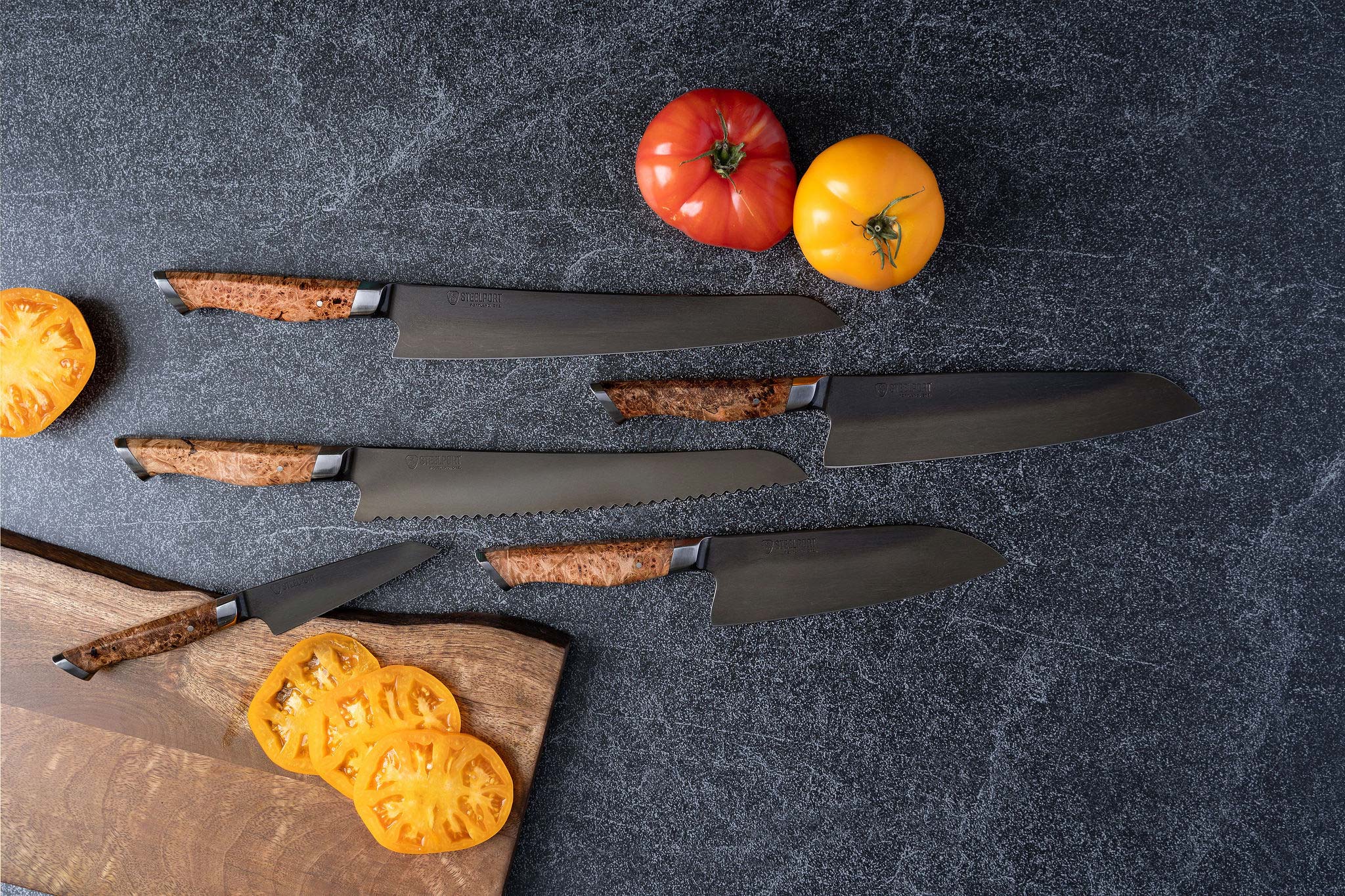



Most home cooks own one knife they actually reach for and a drawer full of ones they don't. Usually, the one they reach for second — right after the chef knife — is a small kitchen knife. And usually, they bought it as an afterthought, packaged into a set, without ever thinking about whether it was the right size or shape for what they actually cook.
That's a mistake, because a small kitchen knife handles a huge share of daily prep work: peeling, trimming, hulling, deveining, and any task where a chef knife is simply too big to control with precision. Choosing the right one matters more than most people assume.
Here's what a paring knife is actually for, the differences between common blade shapes, and how to pick a small kitchen knife that will hold up for years instead of ending up in a drawer.
What is a paring knife, exactly?
A paring knife is a small kitchen knife, typically 3 to 4 inches long, designed for close, controlled work that a larger chef knife can't do safely or precisely. It's the knife you use for peeling an apple, deveining shrimp, hulling strawberries, mincing a single shallot, or trimming fat off a cut of meat — tasks that happen in your hand, not on the cutting board.
It's often called the second most-used knife in any kitchen, right behind the chef knife, precisely because so much everyday prep happens at a small, detailed scale rather than a large one.
Common paring knife shapes (and what they're actually good for)
Not all small kitchen knives are built the same way, and the blade shape changes what the knife is genuinely good at.
Spear point. The classic, symmetrical paring knife shape with a pointed tip centered on the blade. Versatile for general peeling, trimming, and detail work.
Bird's beak. A curved, hooked blade designed almost entirely for peeling round produce like potatoes and citrus. Excellent at one job, less useful for anything flat.
Sheepsfoot. A blade with a straight edge and a spine that curves down to meet it, keeping the tip in line with the cutting edge instead of raised above it. This flatter profile means more of the blade can stay in contact with the cutting board, which makes it noticeably more stable for fine board work like mincing garlic or breaking down shallots, while still being controllable enough for in-hand peeling. STEELPORT's 4" Paring Knife uses this shape specifically because it performs both roles well, rather than forcing a trade-off between board work and in-hand work.
Do you actually need one?
If you already own a chef knife, it's fair to ask whether a small kitchen knife is really necessary. In most kitchens, yes — for a simple reason: control. A chef knife is built for momentum and long, sweeping cuts. A paring knife is built for precision at a scale a chef knife physically can't manage — like scoring a small vent in dough, deveining a shrimp, or trimming silverskin off a tenderloin.
Trying to force a chef knife into that kind of work is where a lot of kitchen injuries and ragged, uneven cuts come from. A properly sized small kitchen knife isn't a luxury add-on to a chef knife — it's the tool that handles everything a chef knife is too big to do safely.
What to look for when buying a small kitchen knife
Blade length. Most paring knives run 3 to 4 inches. Shorter blades (around 3") favor tight in-hand control; slightly longer ones (closer to 4") give a bit more reach for board work without sacrificing much control. A 4" blade is generally the better all-around choice if you're only buying one small knife.
Full tang construction. Just like a chef knife, a paring knife lasts longer and feels more stable when the steel runs the full length of the handle rather than stopping at a thin tang. This also affects balance — a full-tang paring knife with an integral bolster tends to feel more like a scaled-down chef knife than a flimsy peeler.
Steel type. High carbon steel takes a sharper edge and holds it longer than most stainless alternatives, which matters even more on a small blade doing detailed work. The trade-off is that carbon steel needs to be dried after use and occasionally oiled to prevent rust — a small amount of upkeep for a noticeably sharper, longer-lasting edge.
Handle size and grip. Because a paring knife is often used in-hand rather than on a board, handle comfort and grip security matter as much as the blade itself. A contoured, properly sized handle prevents fatigue and slipping during repetitive tasks like peeling.
Bolster and balance. A small knife with no bolster can feel unbalanced and blade-heavy. A forged, full-tang paring knife with an integral bolster — the same construction principle behind a good chef knife — tends to feel far more controlled during precision work.
How a paring knife fits into a full knife set
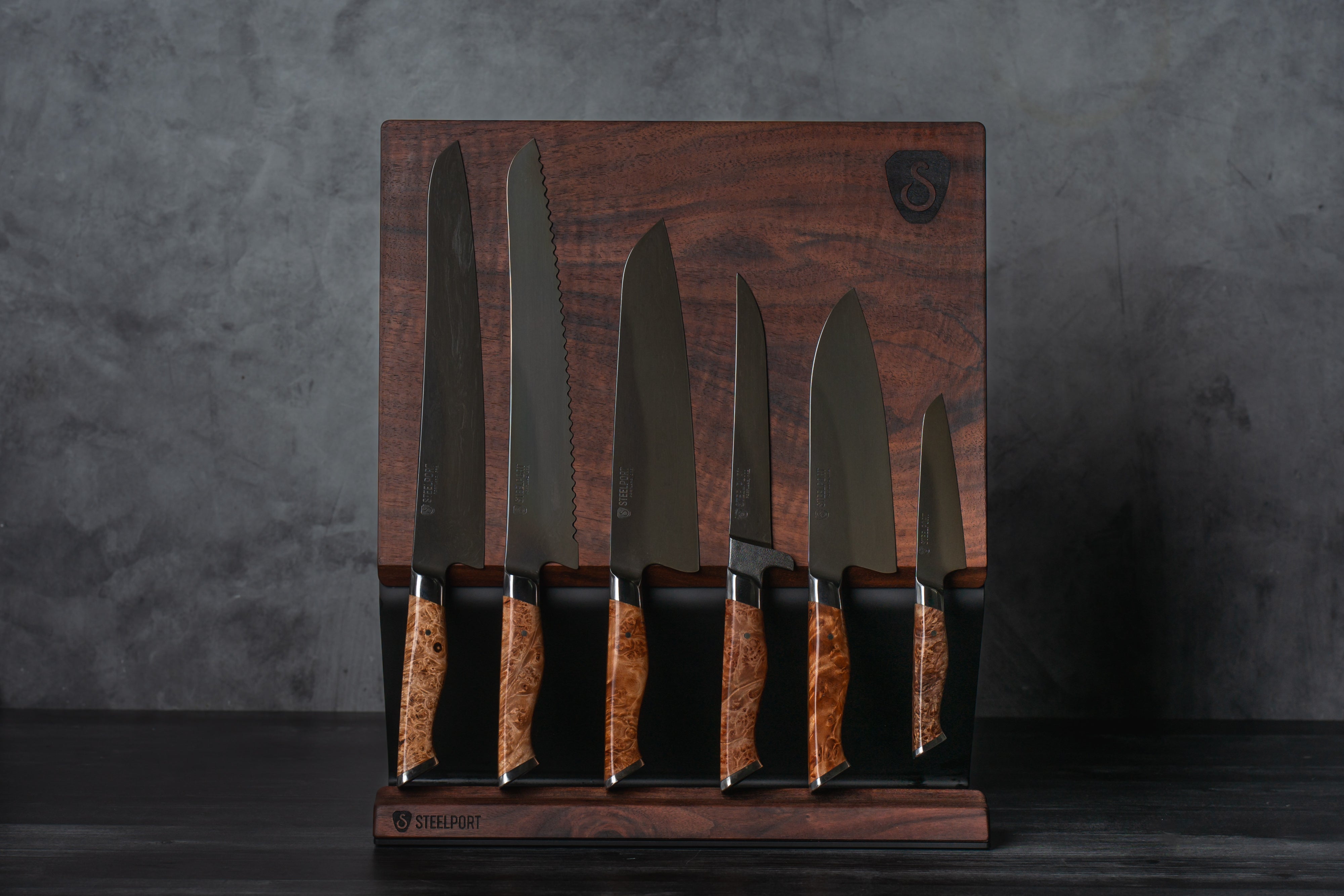
A small kitchen knife isn't meant to replace a chef knife or bread knife — it's meant to fill the gap they leave. A typical, well-rounded home kitchen setup covers three roles: a chef knife for the bulk of chopping and slicing, a bread knife for serrated work, and a paring knife for everything in between that requires precision over power. If you're building out a set rather than buying pieces individually, STEELPORT's 3-Piece Essential Set pairs the 8" Chef Knife with the 4" Paring Knife and 10" Bread Knife specifically to cover that range.
Steelport Knife
- Address: 3602 NE Sandy Blvd, Suite B, Portland, OR 97232, United States
- Phone: (503) 498-8132
- Email: hello@steelportknife.com
- Website: https://www.steelportknife.com/
FAQs
What's the difference between a paring knife and a utility knife?
A paring knife (3–4") is built for fine, in-hand work like peeling and trimming. A utility knife is typically longer (5–7") and sits between a paring knife and a chef knife, handling mid-sized tasks like slicing sandwiches or smaller fruits and vegetables that are too big for a paring knife but too small for a chef knife.
What size paring knife should I buy?
A 4-inch blade is the most versatile choice for most home cooks — long enough for light board work, short enough for precise in-hand control. Go smaller (around 3") only if you exclusively do fine, in-hand peeling and detail work.
Can a paring knife replace a chef knife?
No. A paring knife is built for control and precision on small tasks, not power or momentum on larger ingredients. Trying to use one for a chef knife's job — breaking down large produce or proteins — is slower and less safe.
Is a sheepsfoot blade better than a spear point for a paring knife?
It depends on how you use it. A sheepsfoot blade's flatter profile gives it more board contact, which is an advantage for fine mincing and board work. A spear point's centered tip is slightly better suited to piercing and detail carving. Many all-purpose paring knives use a sheepsfoot shape specifically because it performs well at both.
Do carbon steel paring knives need special care?
Yes — hand wash and dry them promptly rather than leaving them wet or running them through a dishwasher, and apply a light coat of oil if they'll sit unused for a while. In exchange, a high carbon steel edge stays sharper for longer than most stainless alternatives, which matters on a knife used for fine, repetitive work.
Conclusion
A small kitchen knife earns its place in the block by doing the precise, in-hand work a chef knife simply isn't built for — peeling, trimming, deveining, and detail cuts that make up more of daily cooking than most people realize. The right one comes down to a shape suited to how you actually cook (sheepsfoot for versatility, bird's beak for peeling), full-tang construction for balance and longevity, and steel that holds a genuinely sharp edge. Buy it as deliberately as you'd buy a chef knife, and it will earn a permanent spot on your cutting board rather than a drawer.