
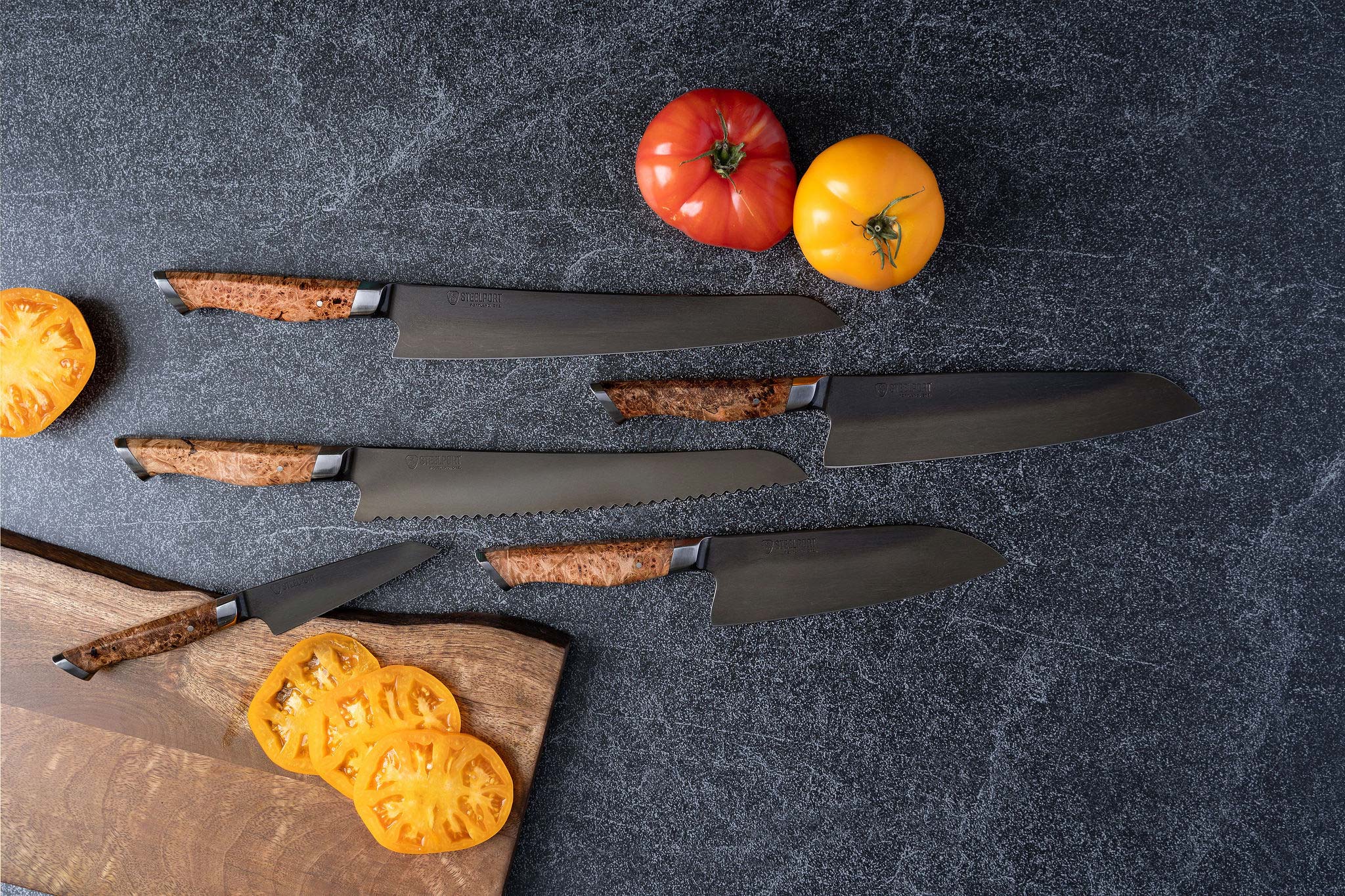


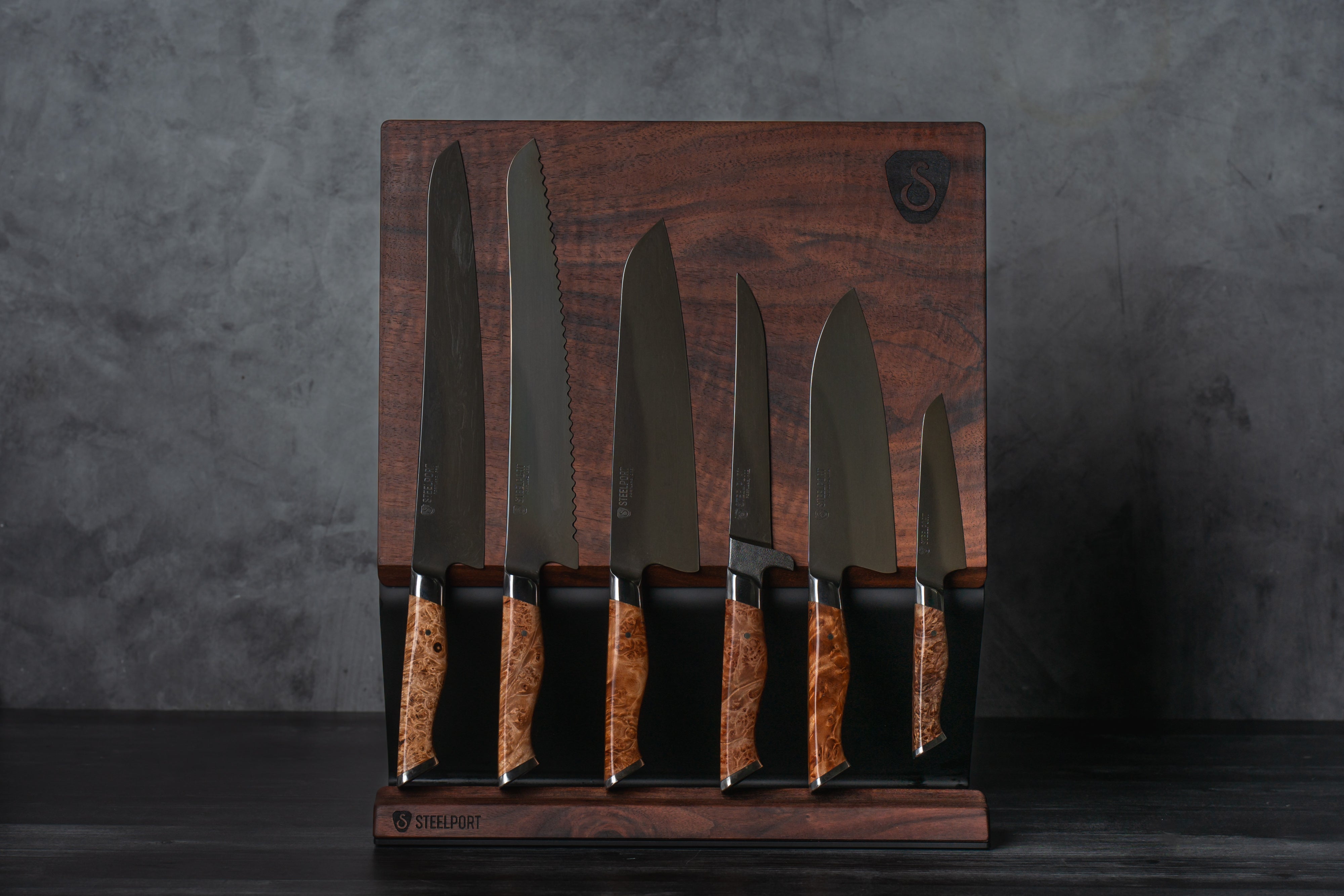

Whether you're a professional chef, passionate home cook, or culinary enthusiast, the quality of your kitchen knife can significantly impact your cooking experience. Among the many knife options available today, forged kitchen knives continue to be regarded as one of the most trusted choices for precision, durability, and performance.
Unlike mass-produced stamped knives, forged knives are crafted through a specialized manufacturing process, rooted in traditional methods, that enhances strength, balance, and edge retention. This is why many professional chefs and serious home cooks prefer forged blades for daily food preparation.
In this comprehensive guide, we'll explore what forged kitchen knives are, their advantages, key features, and how to choose the best forged knife for your kitchen. The focus here is on a combination of great heat treatment with a drop forge method of construction.
What Are Forged Kitchen Knives?
A forged kitchen knife is created from a single piece of steel that is heated and shaped under high impact. This forging process produces a stronger and more durable blade compared to many stamped alternatives.
Key characteristics of forged knives often include:
- Full tang construction
- Enhanced durability
- Superior balance
- Improved edge retention
- Precision craftsmanship
- Long-term performance
Because the blade is formed from a solid piece of steel, forged knives are generally favored by chefs who demand reliability and consistency.
For premium handcrafted kitchen knives and culinary tools, visit: Steelport Knife
How Forged Knives Differ from Stamped Knives
One of the most common questions buyers ask is whether forged knives are worth the investment.
Forged Knives
- Manufactured from a single steel billet
- Typically thicker on spine and stronger
- Better weight distribution
- Excellent durability
- Longer lifespan
Stamped Knives
- Cut from steel sheets using tools similar to cookie cutters
- Generally lighter
- Easier to manufacturer
- Shorter production time
- Often less expensive
While both styles have their place, forged kitchen knives are widely recognized for delivering professional-grade performance.
Benefits of Forged Kitchen Knives
Exceptional Strength and Durability
The forging process helps create a blade that can withstand years of demanding kitchen use.
Professional kitchens often rely on forged knives because they are designed for:
- Frequent chopping
- Precision slicing
- Heavy-duty food preparation
- Long-term reliability
Superior Balance
Balance is one of the defining characteristics of a quality forged knife.
A well-balanced knife provides:
- Greater control
- Reduced hand fatigue
- Improved cutting accuracy
- Enhanced comfort during extended use
Better Edge Retention
Many forged kitchen knives maintain a sharp edge longer than lower-quality alternatives.
This means:
- Fewer sharpening sessions
- Consistent cutting performance
- Improved efficiency in the kitchen
Professional-Level Performance
Chefs often choose forged knives because they deliver precision and consistency across a wide range of culinary tasks.
Why Carbon Steel Forged Knives Are Popular
Among premium knife enthusiasts, carbon steel remains one of the most respected blade materials. This traditional steel gives a broad range to allow for amazing knives well beyond typical stainless steel capabilities when combined with appropriate heat treatment.
Carbon steel forged knives are often valued for:
- Exceptional sharpness
- Excellent edge retention
- Precision cutting ability
- Long-term durability
This collection features handcrafted knives designed for serious culinary performance.
Essential Features to Look for in Forged Kitchen Knives
Full Tang Construction
A full tang extends through the entire handle, providing additional strength and stability.
Benefits include:
- Better balance
- Improved durability
- Enhanced control
Comfortable Handle Design
A knife should feel natural in your hand.
Look for:
- Ergonomic shaping
- Secure grip
- High-quality handle materials
Blade Geometry
The shape and profile of the blade influence performance.
Different designs excel at:
- Slicing
- Chopping
- Dicing
- Precision work
Quality Steel
The steel used in a forged knife directly impacts:
- Edge retention
- Sharpening ease
- Corrosion resistance
- Overall durability
Types of Forged Kitchen Knives
Chef's Knife
The most versatile knife in the kitchen.
Ideal for:
- Chopping vegetables
- Slicing meats
- Dicing herbs
- General food preparation
Shorter 6” Chef, Santoku or Utility Knife
Useful for smaller cutting tasks that require more control or when space is a premium
Paring Knife
Designed for:
- Peeling
- Trimming
- Detailed cutting work
Serrated Bread
Popular for:
- Clean cut of bread or food with hard skin and softer inside
- For larger pieces Thin slicing
- Precision cuts
Vegetable preparation
Why Professional Chefs Prefer Forged Knives
Professional chefs often spend hours using knives every day.
As a result, they prioritize:
Reliability
Forged blades are designed to withstand intensive use.
Precision
Sharp, balanced knives improve cutting accuracy.
Comfort
Ergonomic designs reduce fatigue during long prep sessions.
Long-Term Value
While forged knives may require a larger initial investment, many chefs view them as long-term tools that provide years of dependable service.
How to Choose the Best Forged Kitchen Knife
When shopping for forged kitchen knives, consider the following:
Your Cooking Style
Ask yourself:
- Do you cook daily?
- Do you prepare large meals?
- Do you need a versatile all-purpose knife?
Blade Material
Premium carbon steel remains a favorite among culinary professionals.
Craftsmanship
Look for:
- Precision forging
- Quality finishing
- Reputable manufacturers
Brand Reputation
Established knife makers often provide greater consistency and customer support.
Caring for Forged Kitchen Knives
Proper maintenance helps maximize performance and longevity.
Recommended practices include:
- Hand washing only
- Immediate drying after use
- Proper knife storage
- Routine honing
- Periodic sharpening
These simple habits can help preserve your knife's cutting performance for years.
Why More Home Cooks Are Investing in Forged Knives
As cooking enthusiasts become more educated about kitchen tools, demand for forged knives continues to rise.
Many buyers appreciate:
- Professional performance
- Long-term durability
- Superior craftsmanship
- Better cutting experience
A high-quality forged kitchen knife is often viewed as one of the most valuable investments a cook can make.
STEELPORT Knife Co.
Address: 3602 NE Sandy Blvd, Suite B, Portland, OR 97232, United States
Phone: (503) 498-8132
Email: hello@steelportknife.com
Frequently Asked Questions
What are forged kitchen knives?
Forged kitchen knives are crafted from a single piece of steel that is heated and shaped into a blade, like hammering into shape for drop forge, resulting in superior strength and durability.
Are forged knives better than stamped knives?
Many chefs prefer forged knives because they typically offer better balance, durability, and edge retention.
Why do professional chefs use forged knives?
Professional chefs value forged knives for their reliability, precision, comfort, and long-term performance.
Are carbon steel forged knives worth it?
Carbon steel forged knives are highly regarded for exceptional sharpness, edge retention, and cutting performance.
How long do forged kitchen knives last?
With proper care and maintenance, premium forged knives can provide decades of reliable service.
Where can I buy high-quality forged kitchen knives?
Premium handcrafted forged knives and carbon steel kitchen knives are available through STEELPORT Knife Co.
Conclusion
Investing in forged kitchen knives is one of the best decisions serious cooks can make. From superior balance and durability to exceptional edge retention, forged knives offer the performance and craftsmanship that professional chefs and home cooks rely on every day.
Whether you're upgrading your kitchen tools or purchasing your first premium blade, understanding the benefits of forged knives can help you choose a knife that delivers lasting value, precision, and enjoyment for years to come.